
By: Emily Neff (Pappas), Ph.D.
Softball demands explosive power, rapid rotation, and the ability to absorb extreme forces — on every single pitch, swing, and throw. Yet many athletes Only practice pitching to get better at their game.
At relentless, we follow the research. And the research is clear: A 6 pillar approach to understanding the pitch and developing the musculature around it is what drives performance and resiliency. In fact, strength is the single most important tool for building the shoulder, hip, and low back resiliency your daughter needs to stay healthy and perform at her best.
Let’s break down the science:
The Shoulder: Forces That Exceed Bodyweight
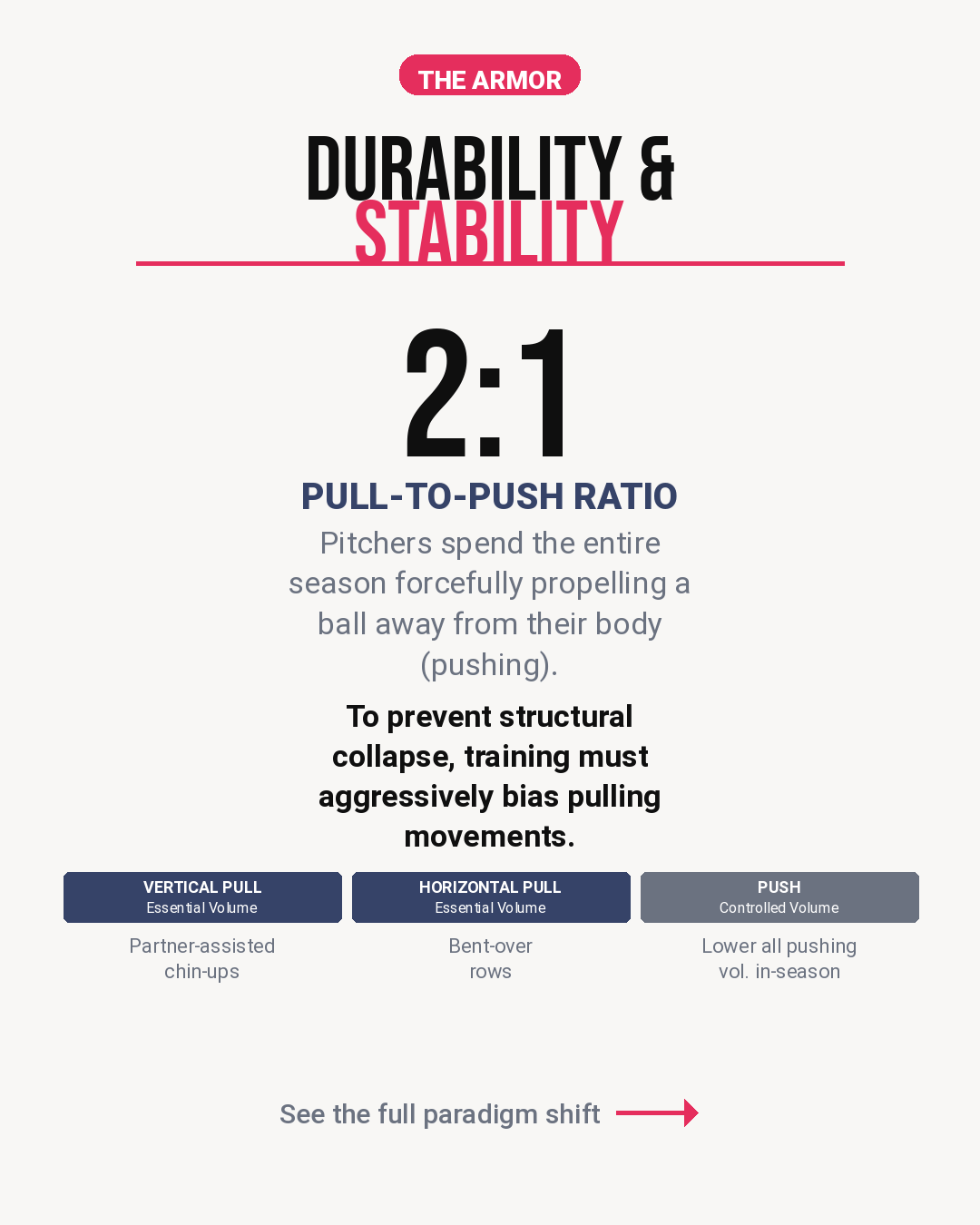
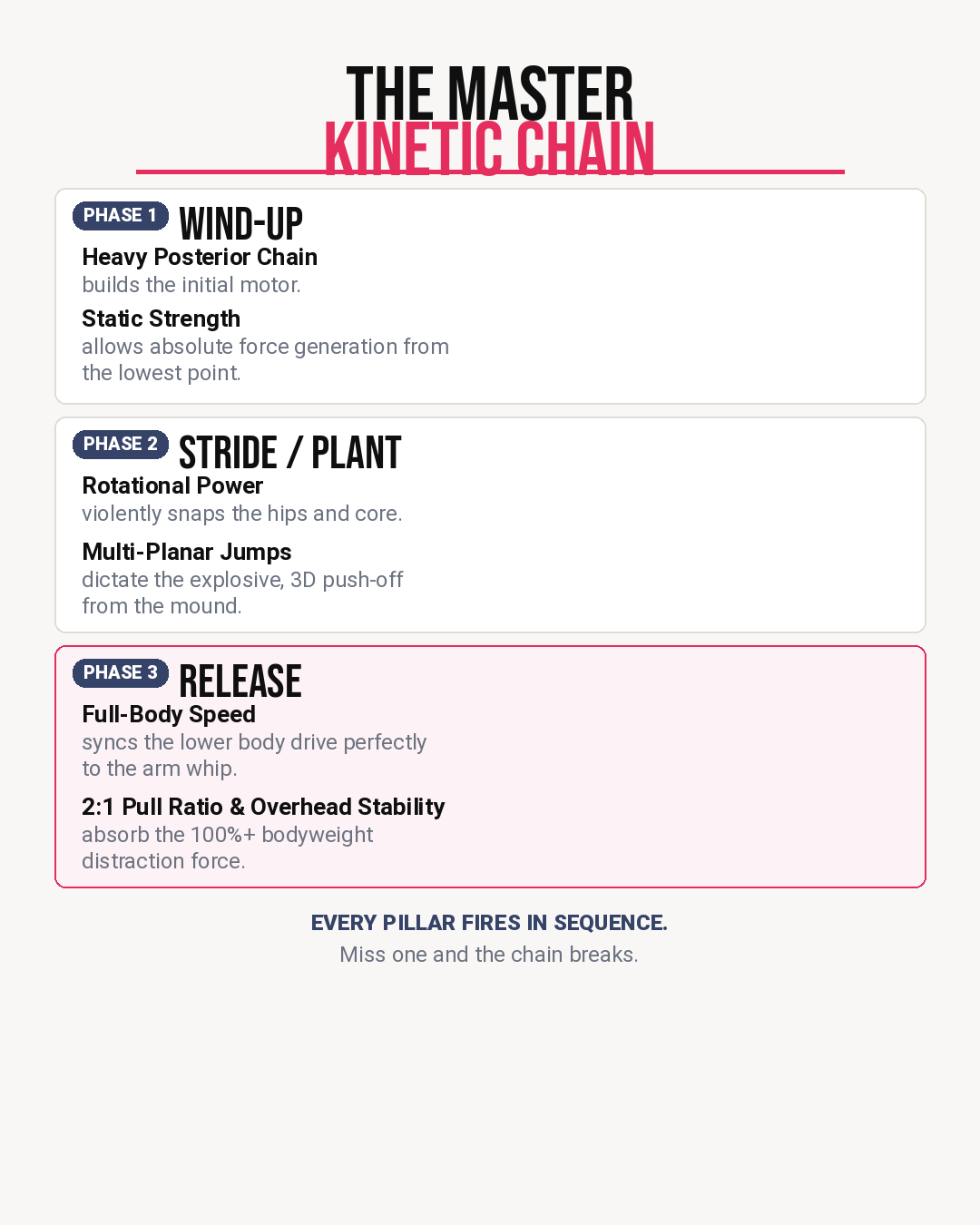
Softball pitching is not the “safe” alternative to baseball that many parents believe it to be. The windmill pitch generates shoulder distraction forces that exceed 100% of the athlete’s bodyweight at ball release (Friesen, Saper, & Oliver, 2022).
These forces are comparable to the overhand baseball throw — dispelling the myth that the underhand motion is easy on the shoulder.
The windmill pitch also requires the shoulder to move through a full 360 degrees of range of motion, demanding strength and stability at every angle.
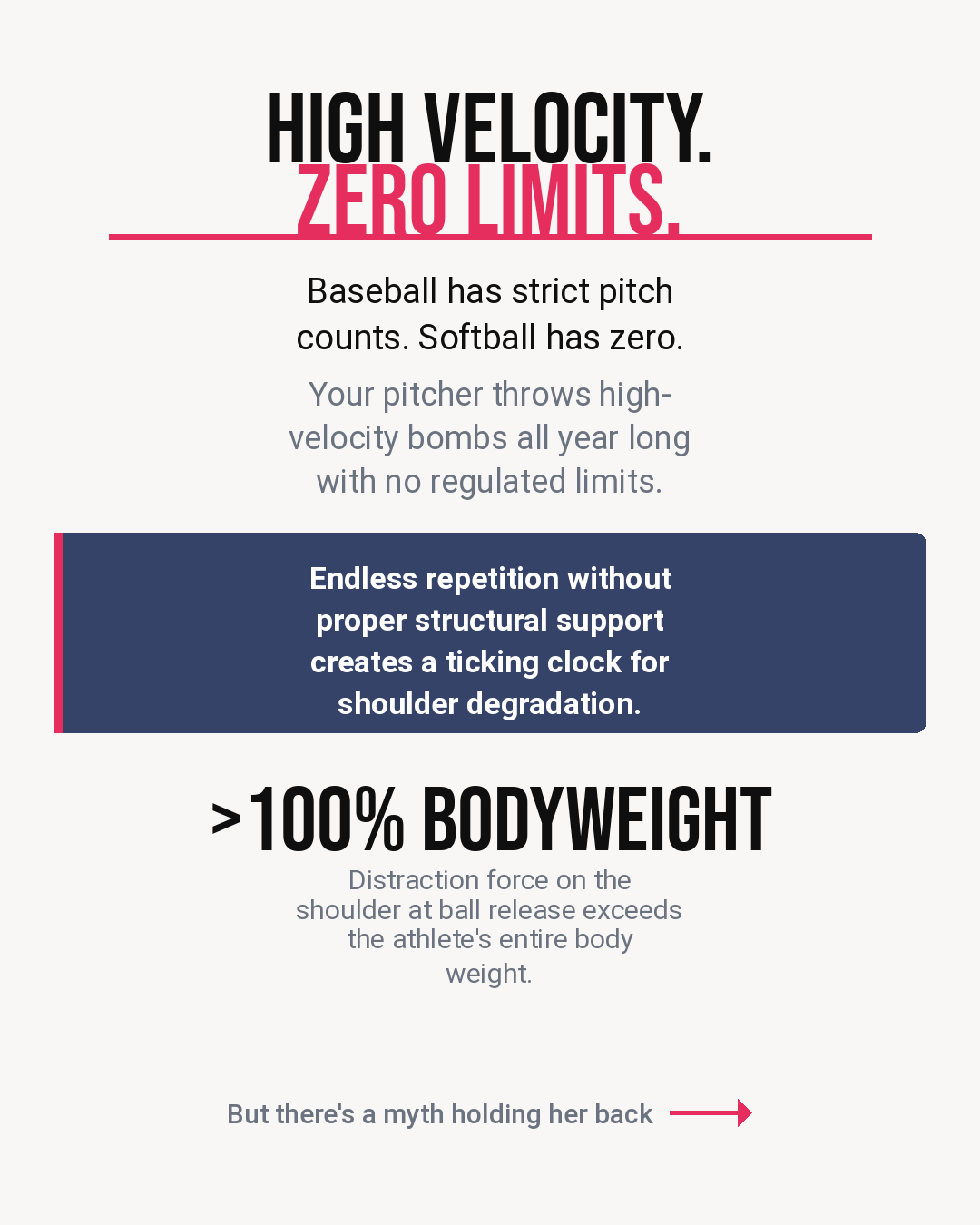
Without year-round strengthening, the shoulder cannot maintain the tissue tolerance needed to handle these forces across a full season.
Research shows that the highest incidence of shoulder injury occurs during preseason and the start of the regular season — precisely when athletes have not been lifting consistently (Oliver et al., 2020).
Shanley et al. (2011) found that shoulder range of motion deficits are significant risk factors for shoulder and elbow injury in high school softball and baseball players. The 2022 Bern Consensus Statement on Shoulder Injury Prevention confirmed that rotational strength imbalance and muscle weakness are modifiable risk factors that can be addressed through strength training.
Guy et al. (2021) documented that shoulder ROM and strength change progressively across a college softball season — further evidence that athletes must train through the season to counteract the cumulative stress of throwing and pitching.
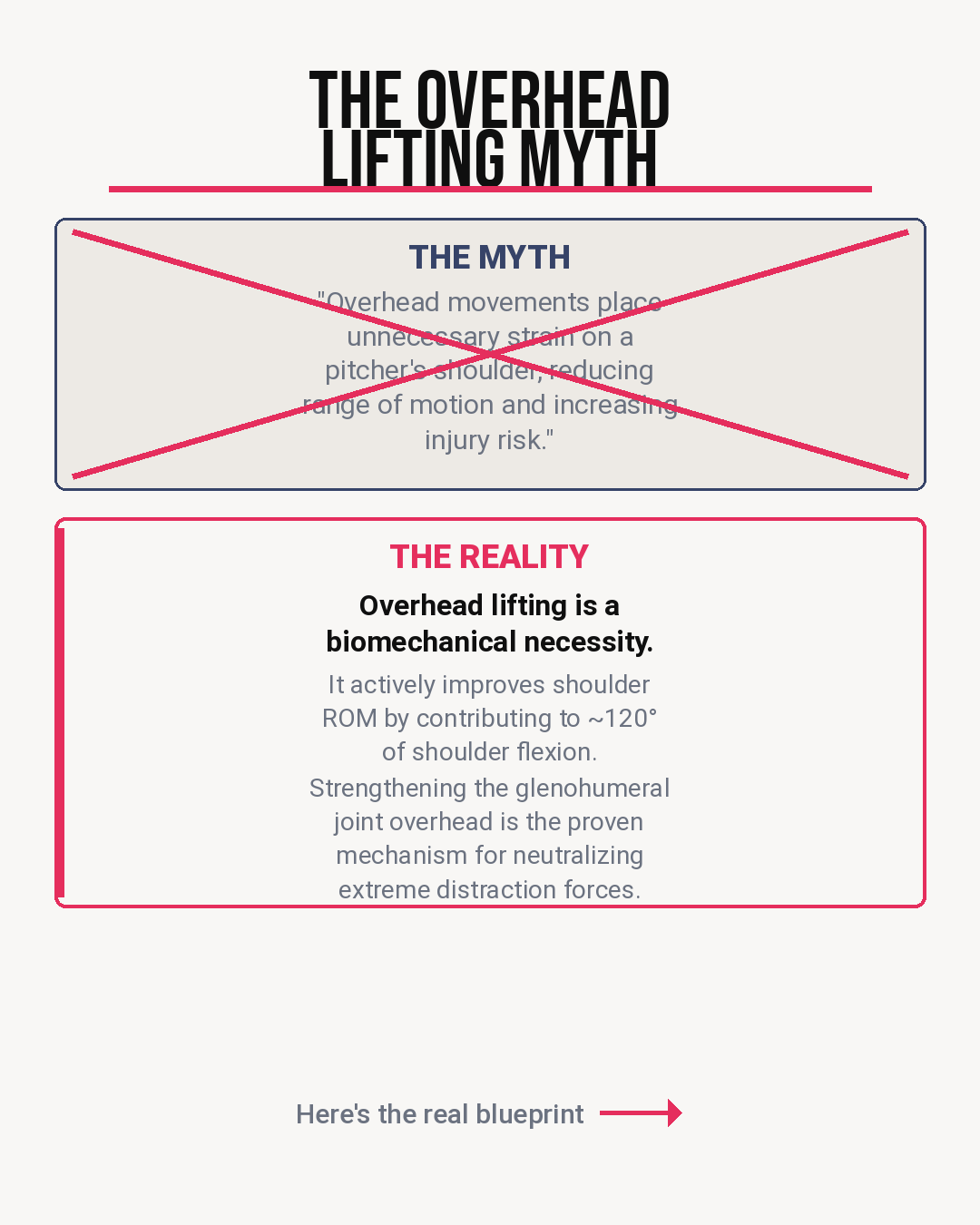
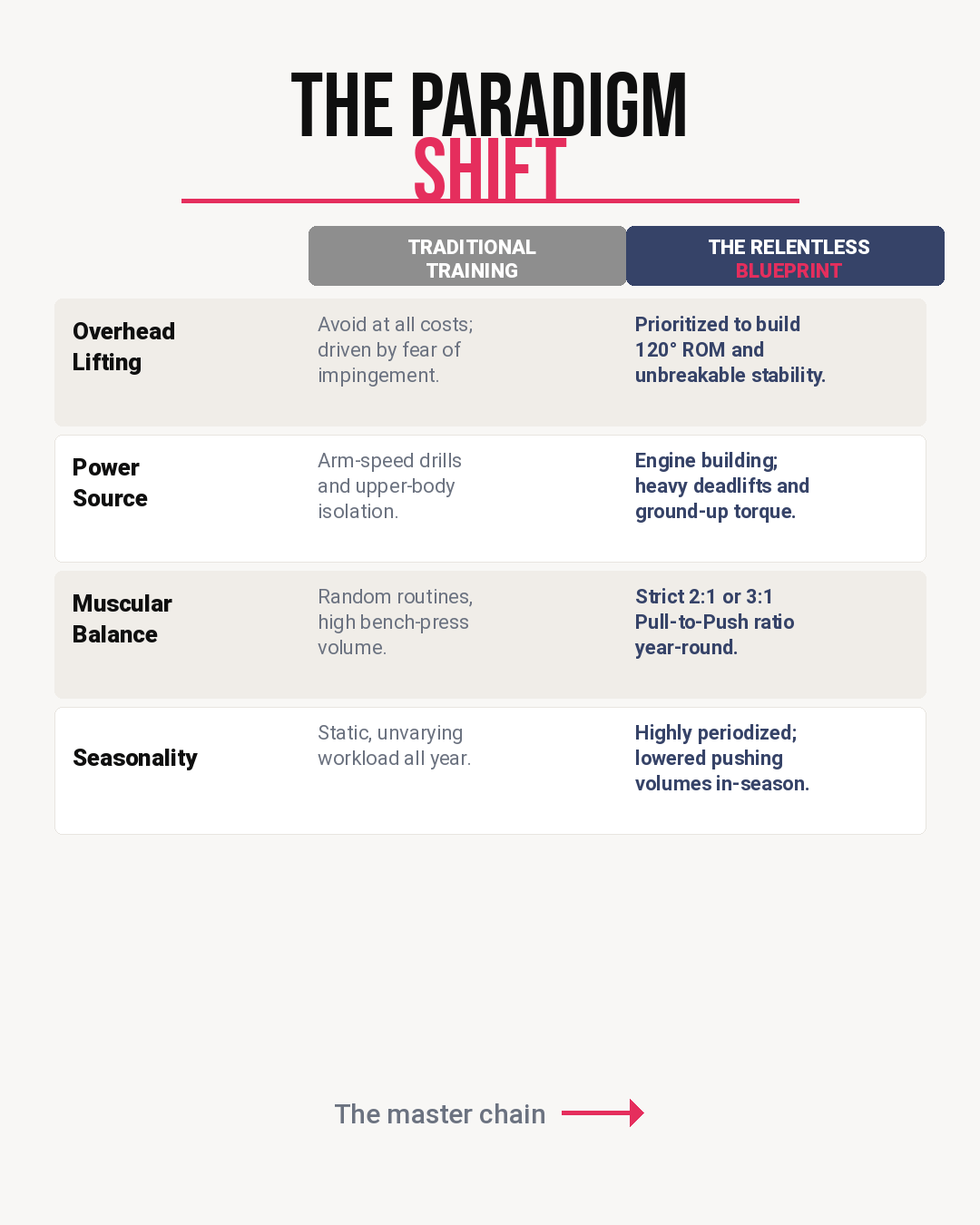
Overhead and shoulder-specific strengthening — performed year-round with proper periodization — builds the tissue tolerance to handle forces that exceed bodyweight on every pitch.
The Hip: The Engine Behind Every Explosive Skill
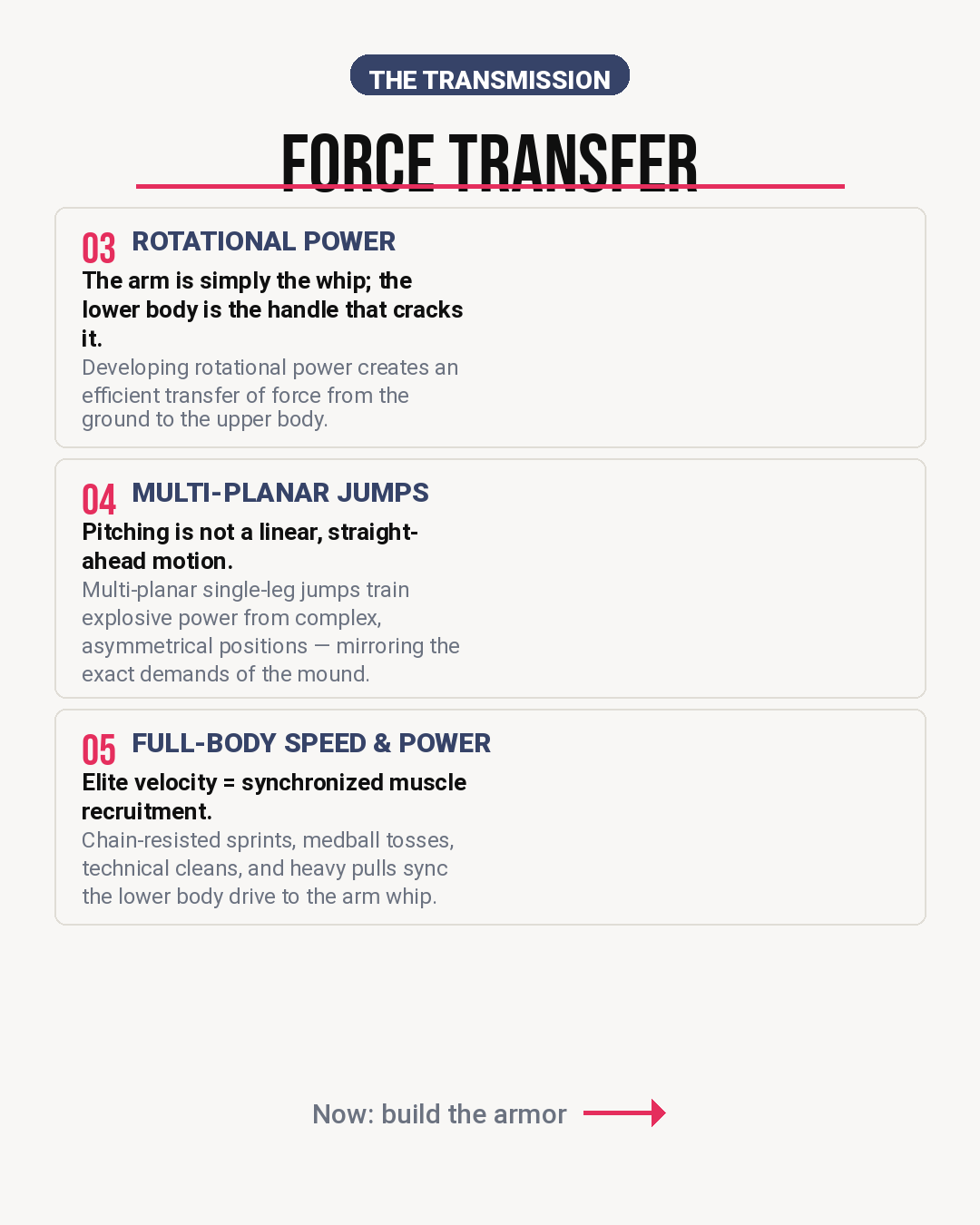
Hitting, throwing, and pitching all begin at the ground and transfer force through the hips and trunk to the upper extremity. When hip strength is inadequate, two things happen: performance drops and injury risk climbs.
Nadler et al. (2000) studied 210 NCAA Division I athletes and found that female athletes with side-to-side hip extension asymmetry were significantly more likely to report lower extremity injury or low back pain. This association was specific to females — male athletes did not show the same vulnerability.
This finding is critical for softball athletes, who are exposed to asymmetrical loading patterns through batting and throwing from one side.
A systematic review in Sports Health found that gluteal muscle activation during the lunge phase of the pitching motion is a key risk factor for throwing-related injuries (Frieman et al., 2021). For catchers, both ipsilateral and contralateral gluteal muscles were found to be essential for lumbopelvic stability — with researchers concluding that catchers should incorporate concentric and eccentric gluteal exercises as part of injury prevention.
From a performance standpoint, the evidence is equally compelling:
✅ Nimphius et al. (2010) found that relative lower-body strength correlated with sprint speed to first base, second base, and overall sprint time in female softball players — with very large relationships (r = −0.75 to −0.87)
✅ A 2024 study confirmed significant correlations between front squat strength and hitting velocity (r = 0.457) in high school girls softball players
✅ At Relentless, our own 8-week study found that athletes who lifted twice per week gained 5.5 inches on their vertical jump — while athletes who relied solely on sport lost 3 inches
The hips are the engine of every softball skill. Weak or asymmetrical hips reduce power output and directly increase injury risk. Year-round hip strengthening — not activation drills, but progressive loaded training — is essential.
The Low Back: Where Rotational Demands and Fatigue Converge
Low back pain is one of the most common complaints among softball athletes, yet it often flies under the radar compared to shoulder or knee injuries.
Every swing, every pitch, and every throw involves rapid trunk rotation and deceleration. When the muscles that stabilize the lumbar spine and pelvis fatigue, the spine absorbs forces it was never designed to handle alone.
A 2024 scoping review identified the key risk factors for back problems in athletes:
✅ Neuromuscular imbalance and increased muscle fatigability
✅ Side-to-side imbalances in axial strength and hip rotation ROM
✅ Spinal overloading and deficits in movement patterning
✅ Muscle dysfunction and impaired motor control
(Zemkova et al., 2024)
Nadler et al. (2002) found that in female athletes, weaker hip abductors significantly predicted the need for low back pain treatment (P = 0.009). Their core-strengthening program also appeared to improve hip extensor strength balance — suggesting that even when pain incidence wasn’t dramatically reduced, the underlying mechanical risk factors were improved.
A critical consideration: the tournament culture of club softball often involves hundreds of pitches across a weekend with minimal recovery. Without a year-round foundation of trunk and spinal stability, these acute spikes in volume become the tipping point for low back injury.
Power Output: Strength Is the Foundation
Beyond injury prevention, the case for year-round lifting rests on a simple truth: strength underpins power, and power drives every critical softball skill.
Guthrie et al. (2021) compared four NCAA women’s sports and found that softball athletes demonstrated the greatest upper body strength, lower body strength, and lower body power — outperforming field hockey, soccer, and volleyball athletes across the board.
A 2024 analysis of NCAA Division II softball players confirmed that relative lower-body strength correlated with more measures of power, speed, and agility than absolute strength alone.
What happens when athletes stop lifting?
McGuigan et al. (2022) showed that even brief periods without structured resistance training lead to measurable declines in force production and explosive capacity.
For softball athletes playing year-round, there is no true off-season. If strength training stops during the competitive season, power output declines, sprint speed decreases, and hitting velocity drops.
The in-season window is not about building maximal strength — it is about preserving it through lower-volume, higher-intensity maintenance work.
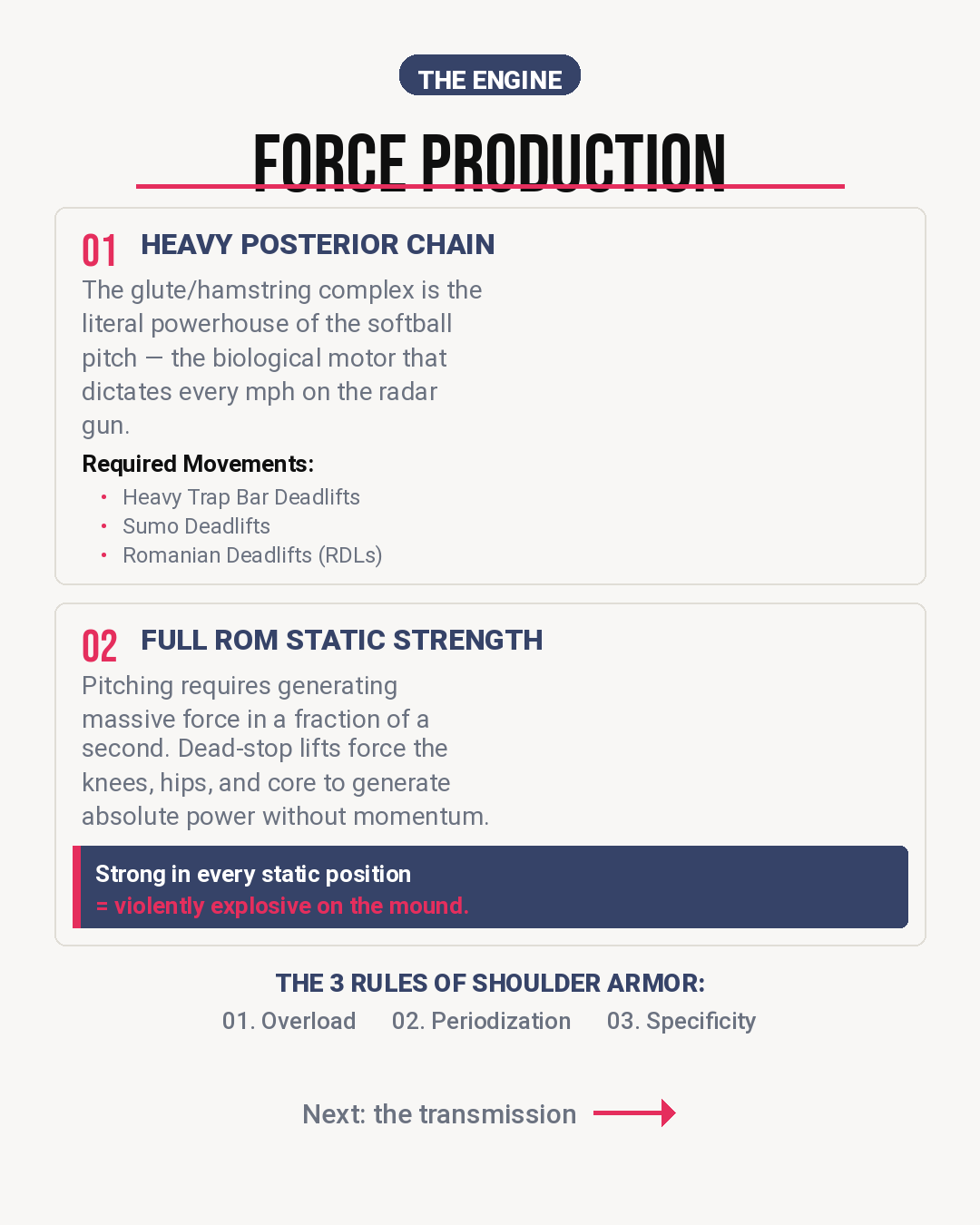
The Relentless Approach: 3 Principles for Year-Round Training
At Relentless, our year-round programming for softball athletes is built on three foundational principles:
1. OVERLOAD
We progressively increase volume, intensity, and movement complexity over time to drive continued adaptation. For the shoulder, this means loaded overhead and rotational work. For the hip and low back, this means heavy compound movements like squats, deadlifts, and lunges.
2. PERIODIZATION
We manage workload across the calendar so athletes build strength during the off-season, maintain it during competition, and recover between peak demands. This is especially critical for softball pitchers navigating tournament weekends.
3. SPECIFICITY
We train what softball demands:
✅ A 2:1 or 3:1 pulling-to-pushing ratio for shoulder balance
✅ Lower pushing volumes during high-pitching seasons
✅ Targeted work for forearm extensors, hip abductors, and trunk rotators
✅ Core and posterior chain strength to improve total-body stability
The Verdict: Year-Round Lifting Is Non-Negotiable
The research is clear: softball places extreme demands on the shoulder, hip, and low back. These demands do not disappear when the season starts — they intensify.
Year-round strength training, guided by sound periodization and sport-specific programming, builds the tissue resilience to withstand these forces and the power output to dominate on the field.
At Relentless, we ensure our athletes never have to choose between staying healthy and performing at their best. When you lift year-round, you get both.
References
- Friesen, K. B., Saper, M. G., & Oliver, G. D. (2022). Biomechanics Related to Increased Softball Pitcher Shoulder Stress. Am J Sports Med, 50(1), 216–223.
- Oliver, G. D., et al. (2020). Softball pitching mechanics and shoulder injuries: a narrative review. Annals of Joint, 5, 28.
- Shanley, E., et al. (2011). Shoulder ROM measures as risk factors for injuries in high school softball and baseball players. Am J Sports Med, 39(9), 1997–2006.
- JOSPT Consensus Group. (2022). Bern Consensus Statement on Shoulder Injury Prevention and Return to Sport. JOSPT, 52(1), 11–17.
- Guy, C. R., et al. (2021). Shoulder and Hip ROM and Strength Changes Throughout a Season in College Softball Players. Int J Sports Phys Ther, 16(6), 1492–1503.
- Nadler, S. F., et al. (2000). Lower Extremity Injury, Low Back Pain, and Hip Muscle Strength in Collegiate Athletes. Clin J Sport Med, 10(2), 89–97.
- Nadler, S. F., et al. (2002). Hip muscle imbalance and low back pain in athletes. Med Sci Sports Exerc, 34(1), 9–16.
- Nimphius, S., McGuigan, M. R., & Newton, R. U. (2010). Strength, power, speed, and change of direction in female softball players. J Strength Cond Res, 24(4), 885–895.
- Lockie, R. G., et al. (2024). Lower-Body Strength and Sport-Specific Performance in High School Girls Softball Players. Int J Sports Phys Ther, 19(4).
- Guthrie, B., et al. (2021). Physical Performance Assessments of Strength and Power in Women Collegiate Athletes. J Strength Cond Res.
- Frieman, B. G., et al. (2021). Injury Prevention Programs for Throwing Injuries in Softball Players: A Systematic Review. Sports Health.
- Prokopy, M. P., et al. (2008). Closed-Kinetic Chain Upper-Body Training Improves Throwing Performance in NCAA DI Softball Players. J Strength Cond Res, 22(6), 1790–1798.
- McGuigan, M. R., et al. (2022). Changes in muscle architecture and performance during a competitive season in female softball players. J Strength Cond Res.
- Zemkova, E., et al. (2024). Neurophysiological and biomechanical risk factors for sport-related back problems: A scoping review. J Sci Med Sport.
- Relentless Athletics. (2025). Internal 8-week study: Impact of consistent strength training on vertical jump in female athletes.
ABOUT THE AUTHOR

Emily is the Owner and Program Director at Relentless.
In 2015, Emily opened Relentless Athletics to build a community for female athletes while educating their parents and coaches on the necessity of strength training and sports nutrition to optimize sports performance and reduce injury risks in the female athlete population.
Emily is a Ph.D. candidate with a research focus on female athletes & the relationship between strength training, ACL injury rates, and menstrual cycle irregularities (RED-s). She holds an M.S. in Exercise Physiology from Temple University and a B.S. in Biological Sciences from Drexel University.
Through this education, Emily values her ability to coach athletes and develop strength coaches, using a perspective grounded in biochemistry and human physiology.
When she isn’t on the coaching floor or working in her office, she is at home with her husband Jarrod, their daughter Maya, son William, and of course, their dog Milo (who has become the mascot of Relentless)!!


